
Search Florida Recent Bookings
Florida recent bookings are public records. You can search all 67 counties for jail booking data right now. Each county sheriff in Florida runs a detention center and posts arrest records on their website. Look up who was booked, when the arrest took place, and what charges were filed. The Florida Department of Law Enforcement keeps a statewide criminal records database as well. Most county jails in Florida update their booking lists within hours of an arrest. Some counties post new booking records in as few as 30 minutes. This page covers the main ways to find recent bookings in Florida, from local jail rosters to state-level search tools.
Florida Recent Bookings Quick Facts
Florida Recent Bookings Search
The Florida Department of Law Enforcement is the main state agency for criminal records. FDLE runs the central database. It covers all criminal history across Florida. You can use their system to check booking records, arrest history, and prior charges. The search is open to the public. It costs $25 per name.
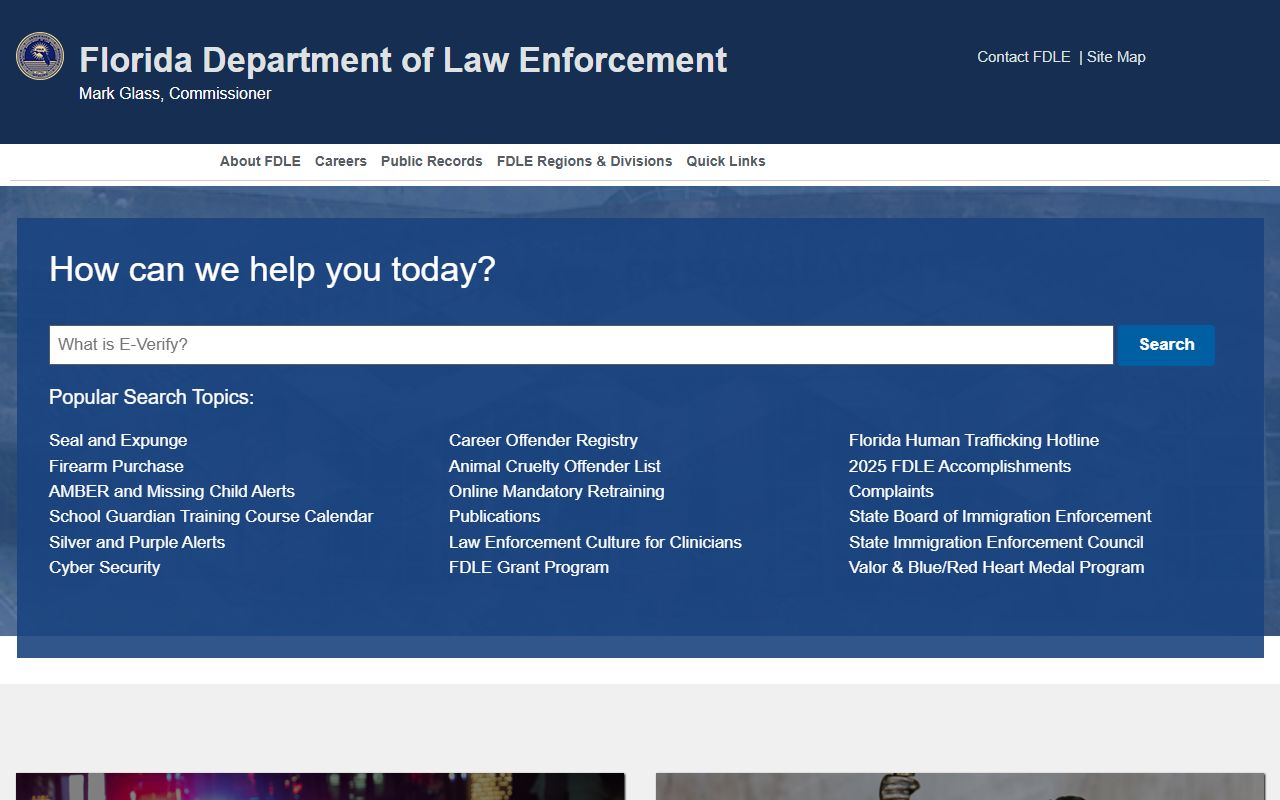
FDLE offers an instant name-based search through their criminal history records portal. You pay $24 plus a $1 online processing fee for each search. Results come up right away after you pay with a debit or credit card. You need the full name of the person you want to check. Date of birth helps narrow results but is not required. When common names show up, a Social Security Number can help tell people apart. The search may return one record, a list of possible matches, or a message saying no record was found. This is the quickest way to check criminal history in Florida from home.
FDLE also handles formal public records requests. You can reach their Office of Open Government by phone at (850) 410-7676 or by email at publicrecords@fdle.state.fl.us. For background check questions, call (850) 410-8161. Fees for copies are 15 cents per single-sided page and 20 cents per double-sided page under state law.
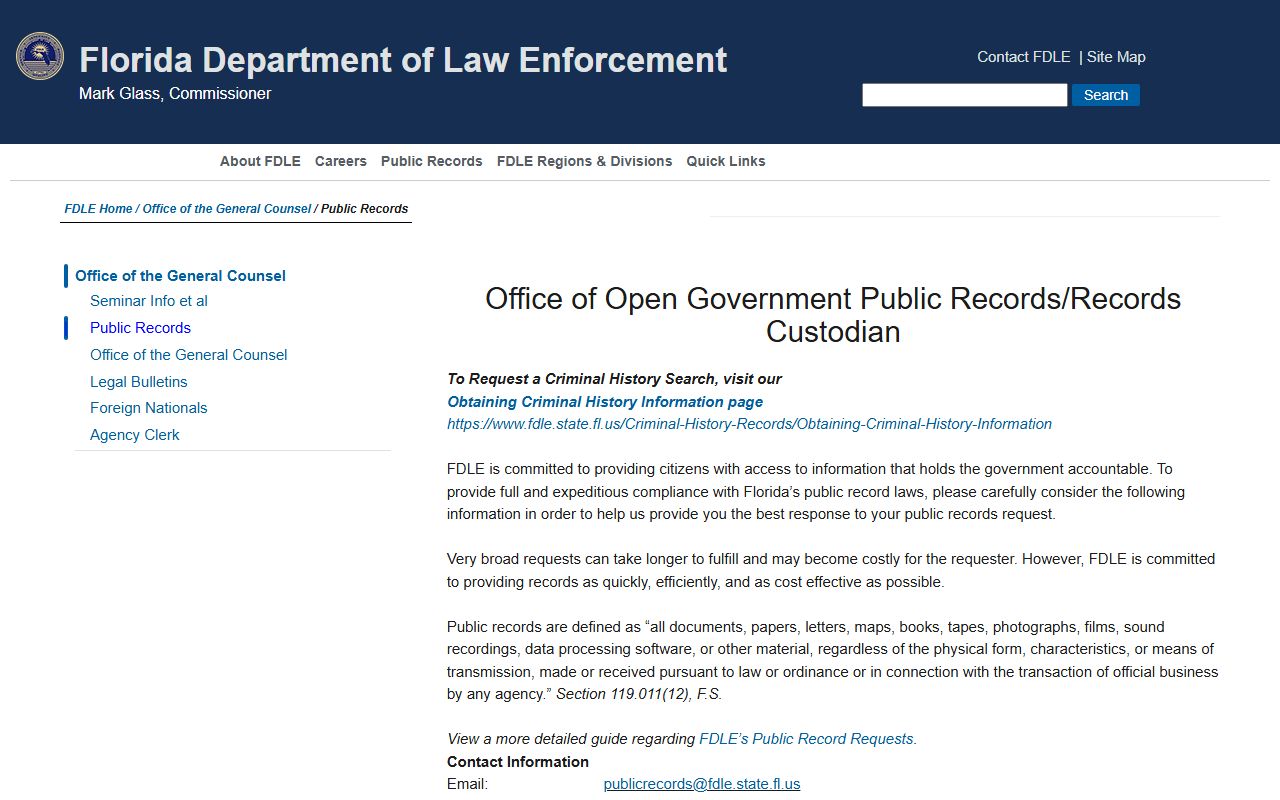
Processing times vary. Online name searches are instant. Mail-in requests take 5 to 7 business days after FDLE gets them.
Florida Corrections Inmate Records
The Florida Department of Corrections runs a separate search system for state prison inmates. This is different from county jail bookings. County jails hold people awaiting trial or serving short sentences. State prisons hold those convicted of felonies serving longer terms. The FDC site lets you search five different databases for Florida inmate records.
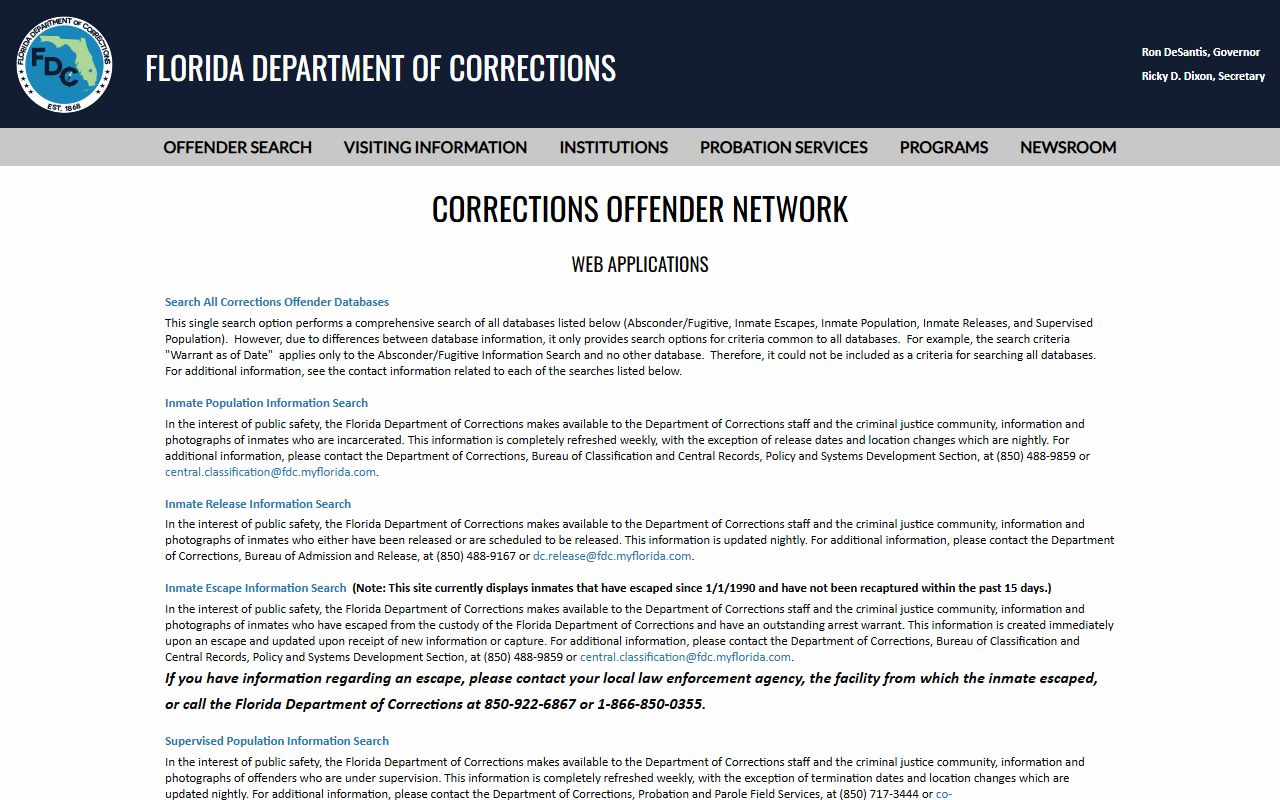
The FDC search tools cover current inmates, released inmates, escapees, supervised offenders on probation or parole, and absconders who stopped showing up for supervision. Inmate data refreshes every week. Release dates and location changes update each night. If someone was arrested in Florida and later sent to state prison, you can track them through this system. For tips on escaped inmates, call the FDC hotline at 850-922-6867 or the toll-free line at 1-866-850-0355.
Note: County jail booking records and state prison records are two separate systems in Florida.
County Jail Bookings in Florida
Each of Florida's 67 counties has a sheriff who runs the county jail. When someone is arrested, the sheriff's office books them into the jail and creates a booking record. These records are public. Most sheriffs post recent bookings on their websites. Some counties update their online roster every 30 minutes. Others update once a day. The level of detail varies by county, but most show the person's name, charges, bond amount, and booking photo.
The Florida Department of State keeps a directory of all county jails with phone numbers and inmate search links. This is a good starting point if you are not sure which county to search. The directory lists every jail in the state with contact info and links to their online search tools where they exist.
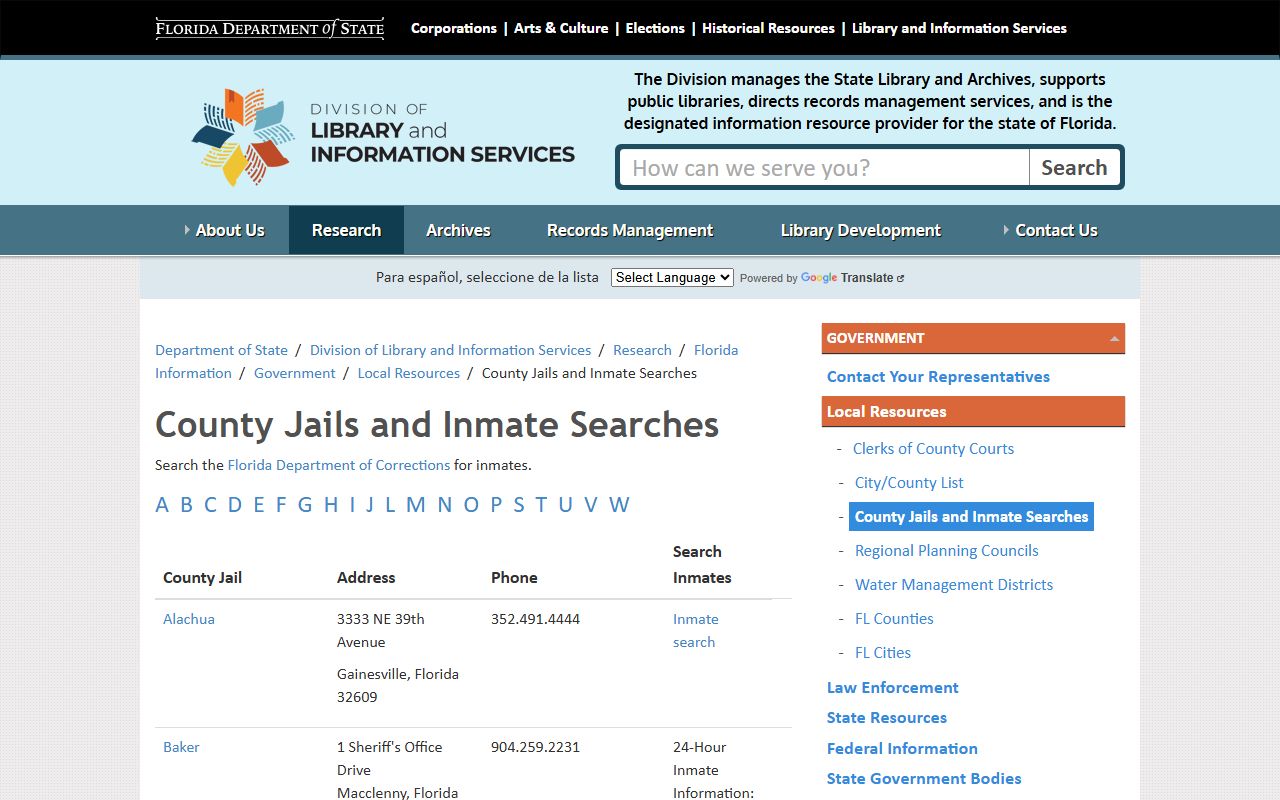
Large counties like Miami-Dade, Broward, and Hillsborough have full online booking search portals. You can search by name and see charges, bond info, and mugshots. Smaller counties may only post a daily booking log or require you to call the jail for information about recent bookings in Florida.
Florida Booking Records and the Law
Florida has strong public records laws. Chapter 119 of the Florida Statutes, known as the Sunshine Law, gives everyone the right to inspect and copy government records. This includes booking records, arrest reports, and mugshots held by sheriff offices. You do not need to give your name. You do not need to say why you want the records. The law is clear on this point.
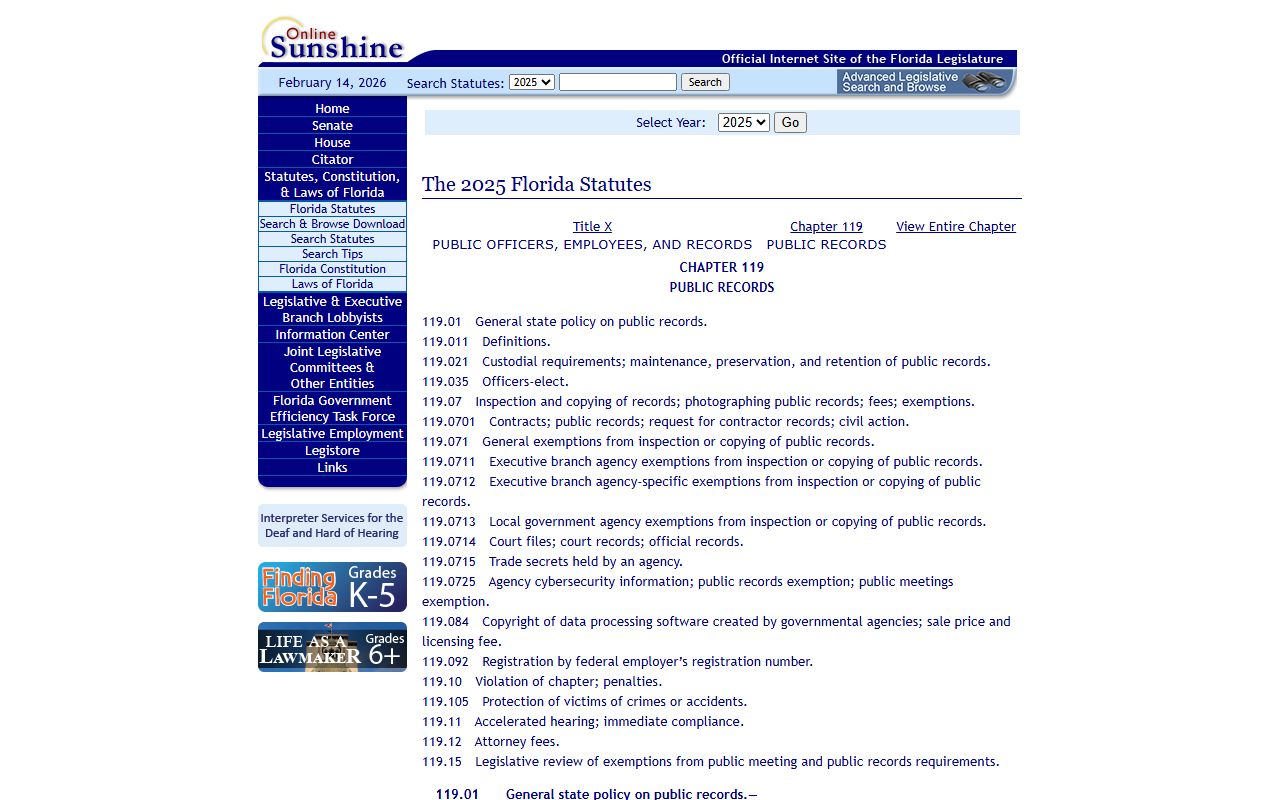
Section 119.07 says that custodians of public records must let any person inspect and examine them at any reasonable time. Standard copy fees are 15 cents per page for single-sided and 20 cents for double-sided copies. When a request takes a lot of time or special tech resources, the agency can charge a special service fee. But the records themselves must be made available. Booking photos are generally public records in Florida under this law.
Chapter 901 governs arrest procedures in Florida. It covers when an officer can arrest someone without a warrant, what happens during booking, and the first appearance rule. Under Section 901.15, police can make a warrantless arrest when a crime happens in their presence, when they believe a felony was committed, or when there is probable cause for domestic violence or battery.
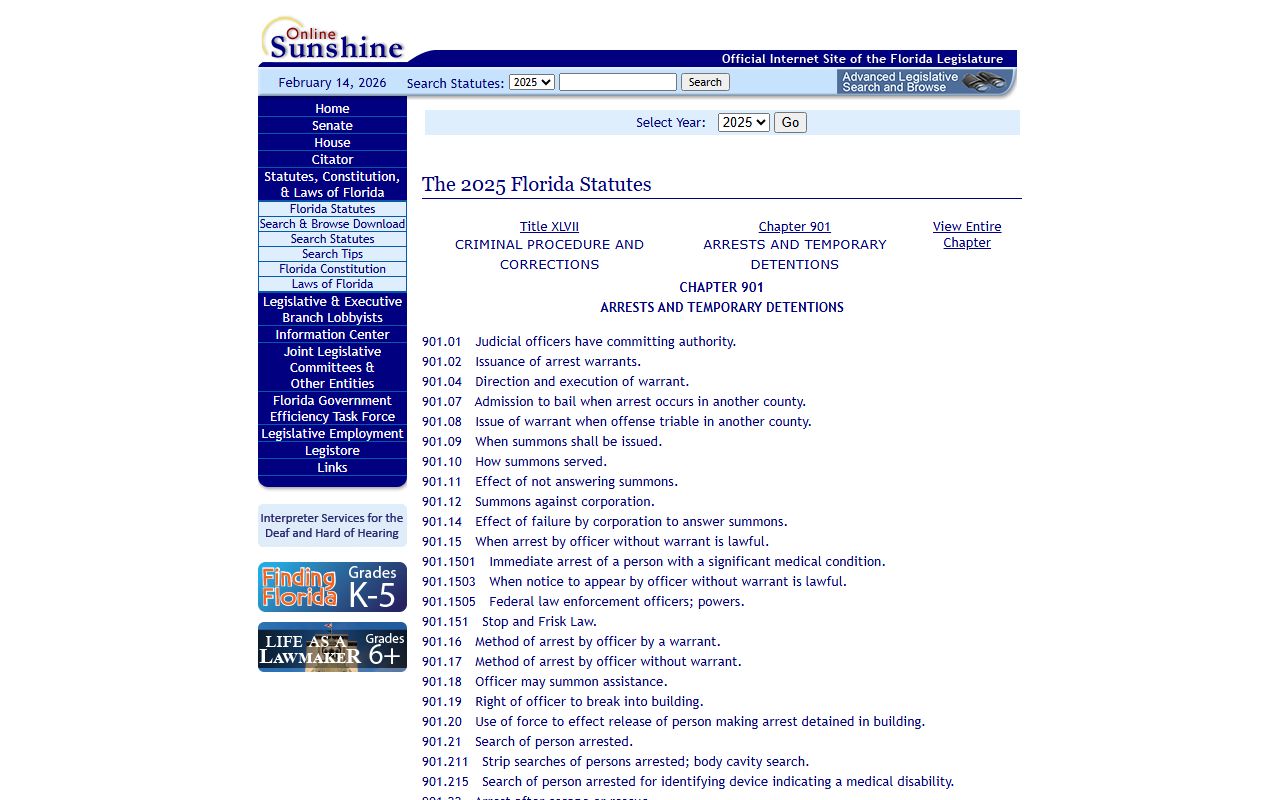
After a warrantless arrest in Florida, the person must see a judge within 24 hours for first appearance. The judge checks if there was probable cause for the arrest and sets the bond amount. This 24-hour rule creates a fast timeline for booking records to appear in public databases across Florida.
Bail and Bond in Florida Bookings
Chapter 903 of the Florida Statutes covers bail and pretrial release. When someone is booked into a Florida jail, a bond is usually set based on a statewide uniform bond schedule. The Supreme Court adopts this schedule each year. Booking officers use it to set initial bonds before the first appearance hearing. The judge can then change the bond amount based on the facts of the case.
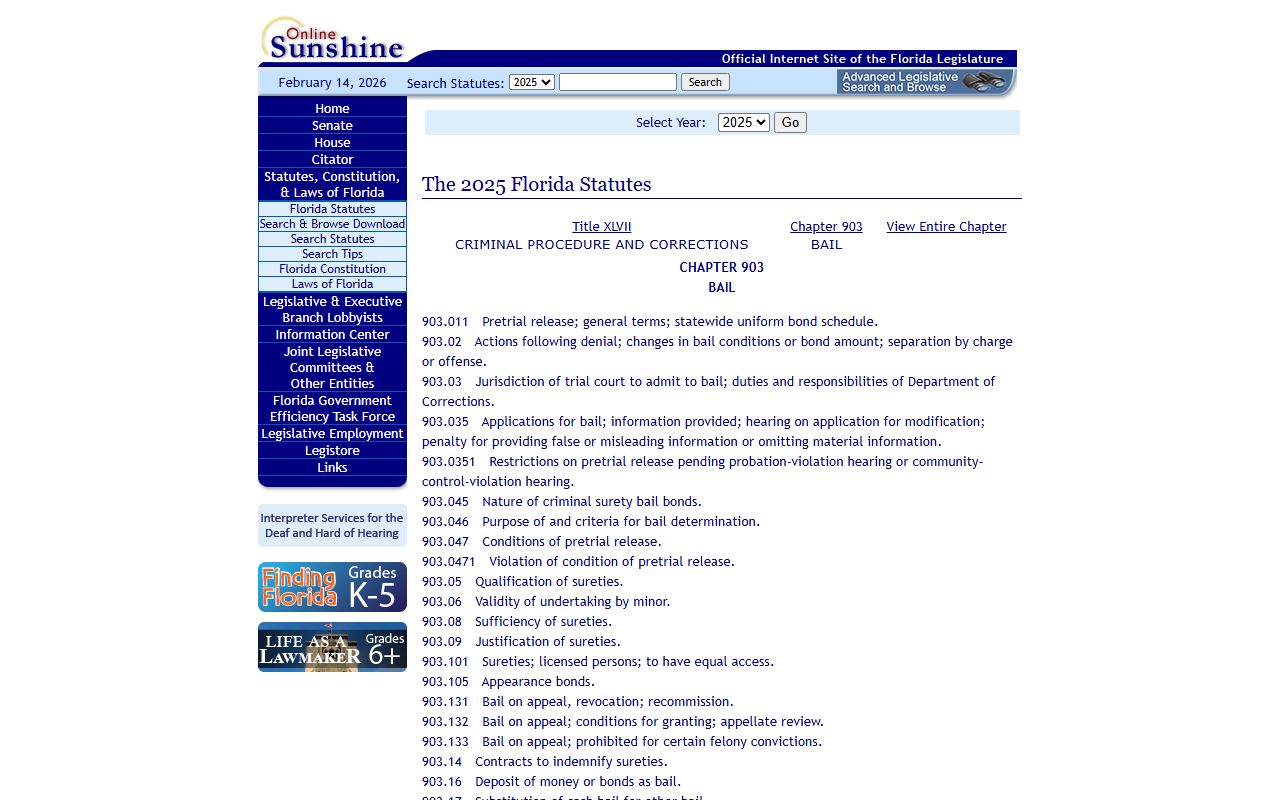
Factors that affect bail include the nature of the charges, the person's criminal history, ties to the community, and whether they pose a danger. Bond amounts show up in booking records. This is why many people search recent bookings in Florida to check bond status for a friend or family member who was arrested.
Chapter 943 sets up FDLE as the state repository for all criminal justice information. It defines what a criminal history record is and how agencies must collect, store, and share this data. It also covers the process for getting records expunged or sealed in Florida. When a record is expunged, it must be physically destroyed by the agency that holds it, except that FDLE keeps a copy for future reference.
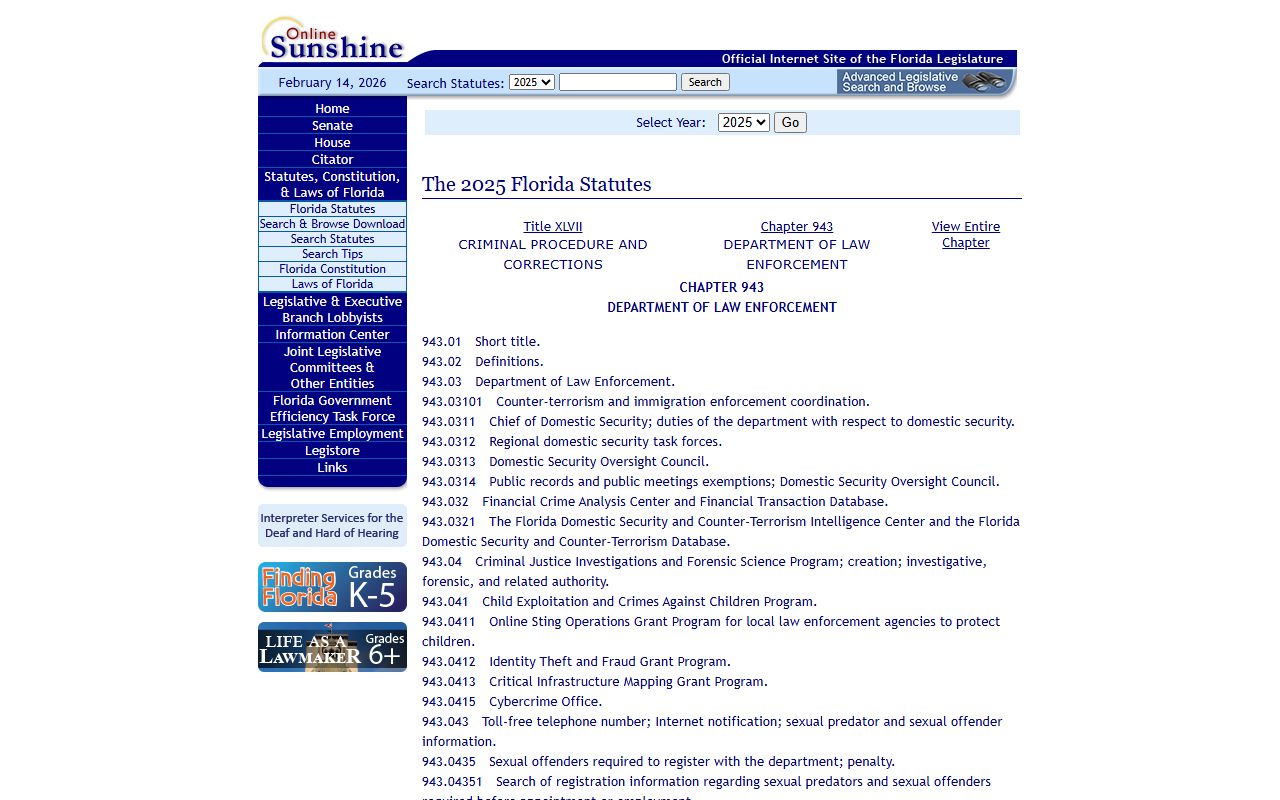
Sealed records are kept but made inaccessible to the public. Only certain agencies can see sealed records. Both options require a court order. These rules mean some older booking records in Florida may not be available through public search tools.
Florida Booking Charges and Penalties
The charges listed in a Florida booking record tell you what the person was arrested for. Chapter 921 of the Florida Statutes lays out the Criminal Punishment Code. This is the system judges use to sentence felony offenders. It uses a point-based approach with 10 offense levels ranked from least severe to most severe. The code applies to all felony offenses committed on or after October 1, 1998, except capital felonies.
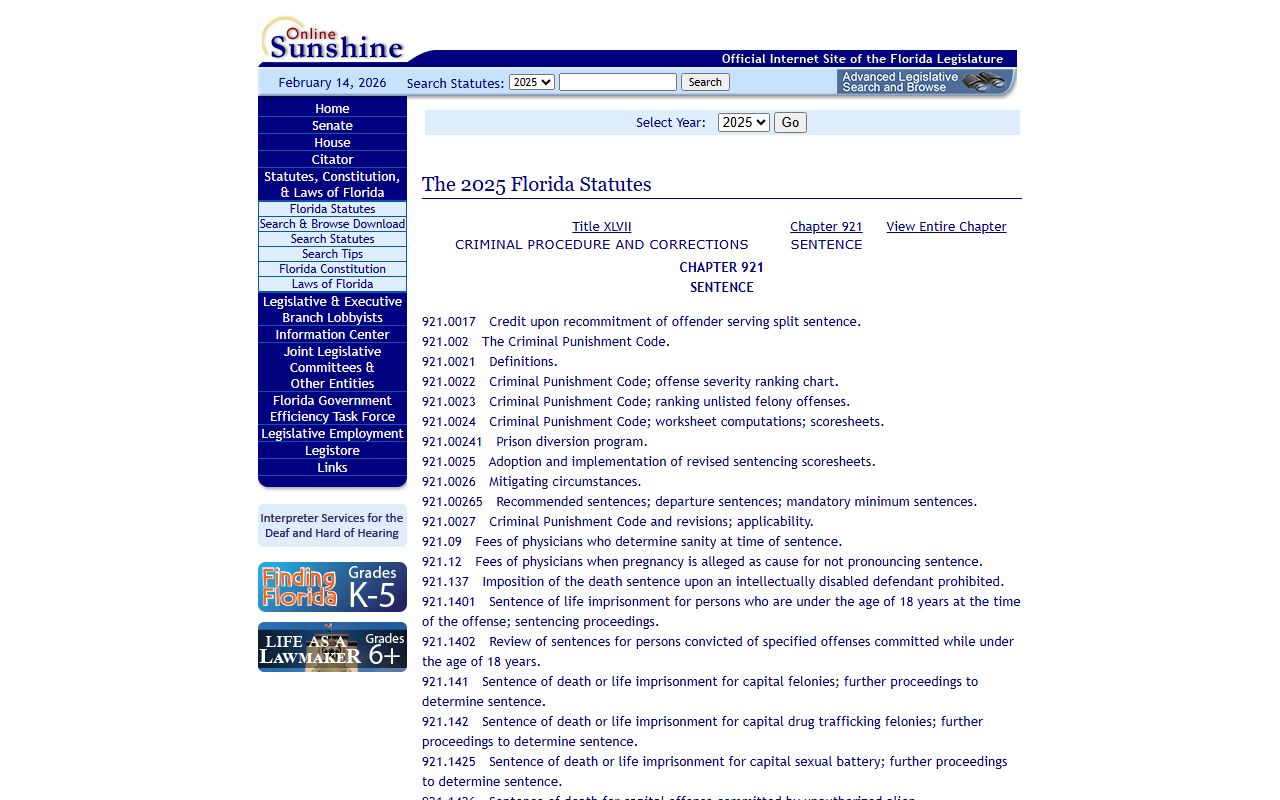
Florida groups crimes into felonies and misdemeanors. A capital felony can mean the death penalty or life in prison with no parole. A first-degree felony carries up to 30 years and a $10,000 fine. Second-degree felonies bring up to 15 years. Third-degree felonies max out at 5 years. For misdemeanors, a first-degree charge means up to 1 year in county jail and a $1,000 fine. A second-degree misdemeanor carries up to 60 days and a $500 fine. These penalties give context to the charges you see in Florida booking records. Keep in mind that a booking record shows what someone was charged with, not whether they were found guilty.
How to Find Recent Bookings in Florida
Start with the county. If you know where the arrest took place, go to that county sheriff's website and look for their inmate search or booking log. Most large counties in Florida have a search tool right on the main page. If you are not sure which county to check, use the state directory or search by the city name on this site.
For statewide searches, FDLE's criminal history record check covers all of Florida. It costs $25 but searches the entire state database. This is useful when you do not know where someone was arrested. County jail searches are free in most cases but only cover that one county.
Booking records in Florida typically include the person's name, date of birth, booking date and time, charges, bond amount, arresting agency, and a mugshot. Some counties also show the arrest location and release information. Records for people who post bond may only appear on the daily arrest report and not the current inmate list. If you can not find someone in the inmate search, try looking at the daily booking report instead.
Browse Florida Recent Bookings by County
Each of the 67 counties in Florida has its own sheriff's office and jail. Pick a county below to find local booking search tools, jail contact info, and inmate lookup resources.
Recent Bookings in Florida Cities
City police departments make arrests, but inmates go to the county jail for booking. Pick a city to find which county handles bookings and how to search arrest records in that area.